


For the past few months, I was enrolled in an online course to become sports nutritionist. As of 2012, I am now a certified Sports Nutritionist. Yay!
One of the longest and most in-depth sections was about Performance Enhancing Substances. Within the section, there was a chapter about alcohol and it’s interaction with the body. I enjoyed this chapter a lot. It was really relevant since I read it around the holidays. With all of holiday festivities/parties, basketball games and football bowl games week after week, I was constantly surrounded by alcohol in some way.
While I enjoy my share of Friday happy hours cocktails, the knowledge I was learning made me rethink my alcohol choices week after week. I figured I would pass along some of this knowledge to you all.
(Note: I am not saying you shouldn’t drink. I am just educating you guys! )
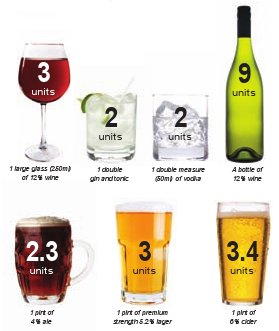

Alcohol and the Body
In general, women should not have more than 2 to 3 units of alcohol a day. This is equal to approximately 1 “regular” drink per day. The infographic will give you an in-depth understanding based on your gender and weight.
Did you know that having more than one standard (80 proof 35ml) alcoholic beverage affects your performance in a significant way? From slowing down your motor skills to dehydration, the effects are eye opening. The unexpected cramp in aerobics class or a poor run might be a direct result from alcohol.
Drinking directly affects your body and your work outs. Some of the side effects of drinking include the following:
1. Build up of lactic acid: Alcohol has the effect of building up lactic acid in the muscles, which could lead to muscle cramps and injury.
2. Alcohol slows down the recovery of cuts and bruises and could lead to injury due to impaired vision and hand eye coordination.
3. Alcohol leads to higher reaction time and slower response to stimuli.
4. Alcohol leads to impaired judgment and impaired vision. This can greatly affect performance in sports such as shooting which require hand eye coordination.
5. Alcohol could lead to loss of body heat as a result of the effect it has on the skin.
6. Alcohol could lead to dehydration as it increases urination. Approximately 4 ounces of body fluid are lost for each drink consumed.
7. Due to excessive urination after alcohol consumption, the body loses essential minerals such as magnesium, calcium and zinc.
8. Alcohol consumption leads to a loss in aerobic performance as it hinders the body’s capability to convert food into usable energy besides building up lactic acid and causing dehydration. Alcohol also hinders the body’s capability to produce blood sugar in the liver. This can have a bad effect on the endurance of the athlete.
Many active may feel relaxed after consuming alcohol and think that they will perform better. However, the truth is that the negative effects of alcohol on the athlete far outweigh the mild relaxation it may offer. Alcohol and sports are incompatible.
 Tweet this!
 Digg it!
 Add to Delicious!
 Share on Facebook!
 Share on Reddit!
 Stumble it



3 Comments
I’m not sure if this is Whitney or Alexandria but either way CONGRATS on your being a Sports Nutritionist!! That is awesome!
LOL it’s technical me (Alex) But I talk so much about this stuff to whitney it’s like we both are. Thank you very much!
LOL it’s technical me (Alex) But I talk so much about this stuff to whitney it’s like we both are.