

When thinking about what women I wanted to highlight for Black History Month (February) my default reaction was to pull up some of my favorites from my childhood. The 80′s and 90′s ruled! However, I wanted to make this blog post a teachable moment for the readers as well as myself. I’ve searched the virtual world high and low for information and photos on African American female athletes. Guess who I found?
Althea Gibson

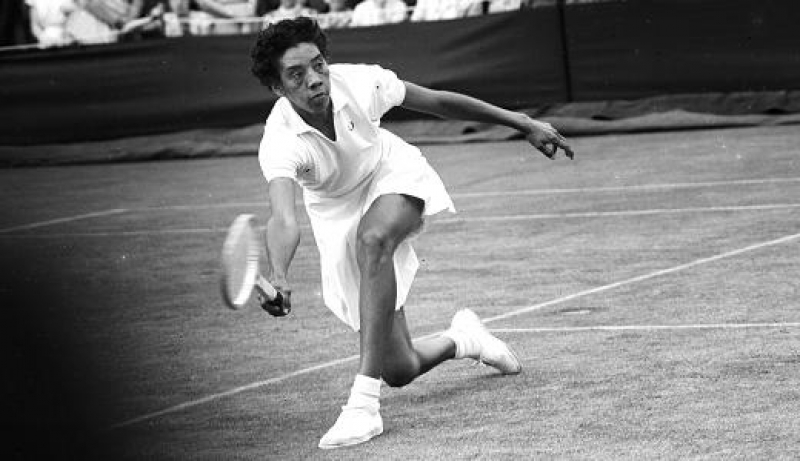
Althea Gibson was an American tennis player. Gibson turned pro at the age of 31 and was the first black tennis player to win Wimbledon (in 1957) and the U.S. Open (in 1958). Aside from her success, she is most remembered for breaking the color barrier in professional tennis. She won a total of five Grand Slam titles:
- U.S. Open: 1958 and 1957
- Wimbledon: 1957 and 1958
- Roland Garros: 1956
In 1957 and 1958 she was the top-ranked U.S. women’s tennis player. Later in life, Gibson turned to professional golf and was the first African American woman to join the LPGA. In 1971 she was included in the prestigious Tennis Hall of Fame. She was also the first African American woman to grace the cover of Sports Illustrated. Please note :Tyra Banks was the first African American swimsuit model on the cover of Sports Illustrated. Love me some Tyra but don’t trust Google. Gibson also played basketball and was really good at shooting pool! Get it Ms. Gibson!
Wilma Rudolph
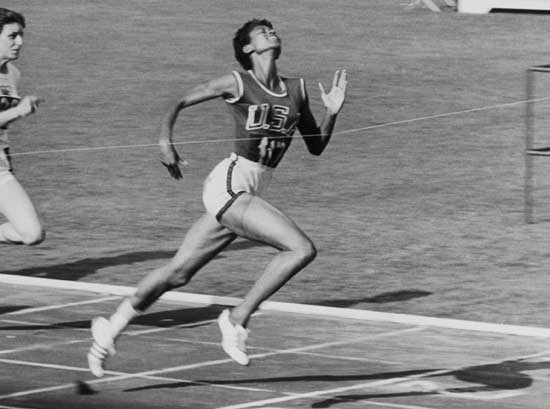
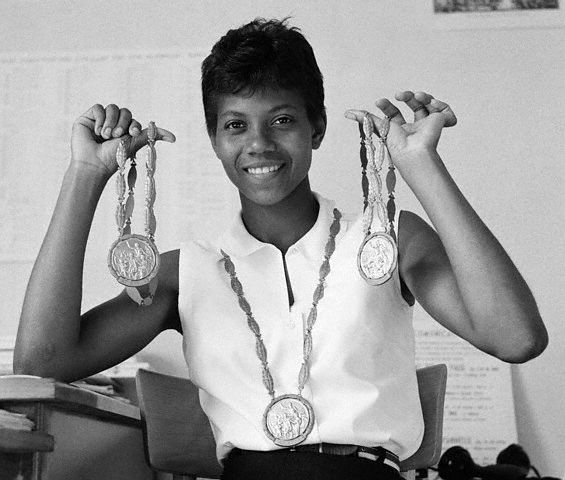
The 20th of 22 siblings, Wilma Rudolph wore a brace on her leg as a child due to it being twisted by the Polio virus. She got rid of the brace and in Rome became the first woman to ever win three track and field gold medals. A track coach encouraged her to start running. She ran so well that during her senior year in high school, she qualified for the 1956 Olympics in Melbourne, Australia. She won a bronze medal in the women’s 400-meter relay. In 1959, she qualified for the 1960 Olympic Games in Rome by setting a world’s record in the 200-meter race. At the Olympics that year she won two gold medals; one for the 100-meter race and one for the 200-meter race. Then she sprained her ankle, but she ignored the pain and helped her team to win another gold medal for the 400-meter relay! She retired from running when she was 22 years old, but she went on to coach women’s track teams and encourage young people. Word on the street is the fictitious character Forrest Gump’s struggle and triumph over walking with leg braces was inspired by Ms. Rudolph’s actual life. Wow to the second power!
Alice Coachman
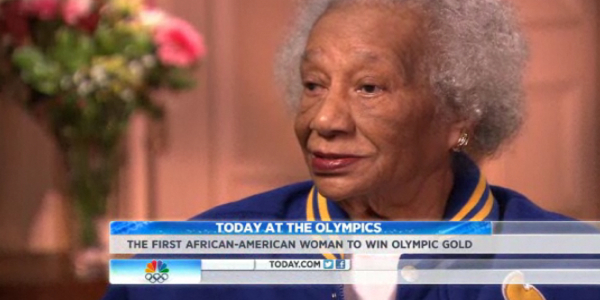
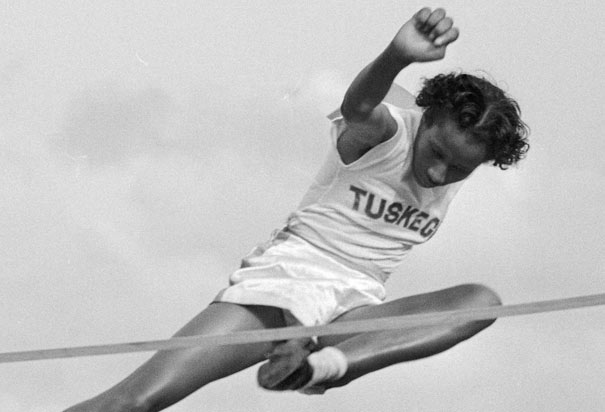
Do you know the name of the FIRST African American woman to win a gold medal at the Olympics? Her name is Alice Coachman. In London in 1948, Coachman became the first African American woman to win a gold medal, when she won the high jump competition. She was also the only female American athlete to win a medal of any kind at these Olympics. A fine sprinter as well as a superb high jumper, there’s little doubt she would have won more medals had the 1940 and 1944 games taken place. During the war years no international competitions had taken place, but Alice held the national US championship from 1939 to 1948. Few women athletes have ruled their sport in such a way as Alice dominated the high jump. As well as winning Olympic Gold, she was named to five all-American teams. She has also been inducted into eight different Halls of Fame. She was also honored at the 1996 Atlanta Olympics when she was named as one of the 100 greatest ever Olympic athletes. Shout out to her alma mater, Tuskegee University! Courtesy of Olympic 30
Wyomia Tyus
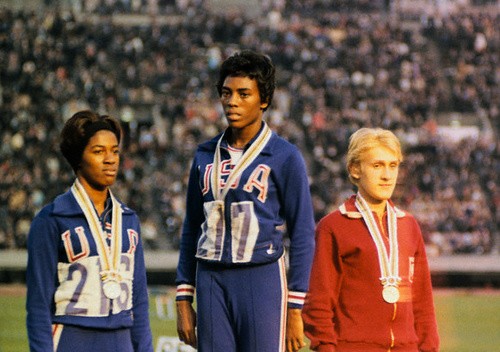
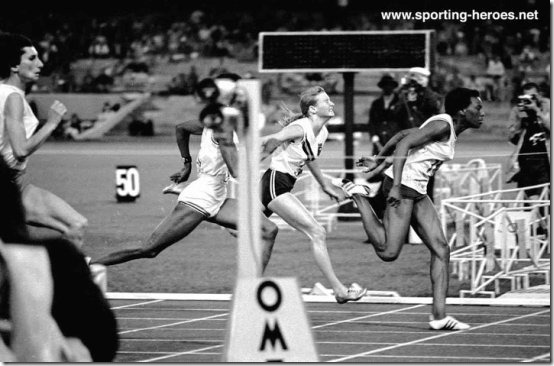
In high school she competed in the Girls’ National Championships of the Amateur Athletics Union, placing first in the 50-yard, 75-yard, and the 100-yard races. After winning the 1964 Olympic gold medal in the 100-meter dash, Wyomia Tyus traveled to African countries as a goodwill ambassador, running training clinics and helping athletes learn to compete in world competitions. Tyus planned to compete again in 1968 and was caught up in the controversy over whether black American athletes should compete or should refuse to compete in protest of American racism. She chose to compete. She did not give the black power salute when she was honored for winning gold medals for the 100-meter dash and as anchor of the team for the 400-meter relay, but she wore black shorts and dedicated her medal to the two athletes, Tommy Smith and John Carlos, who had given the black power salute when they won their medals. Wyomia Tyus was the first athlete to win gold medals for a sprint in consecutive Olympics. The silver medalist in this picture is Edith McGuire.
Mabel Fairbanks
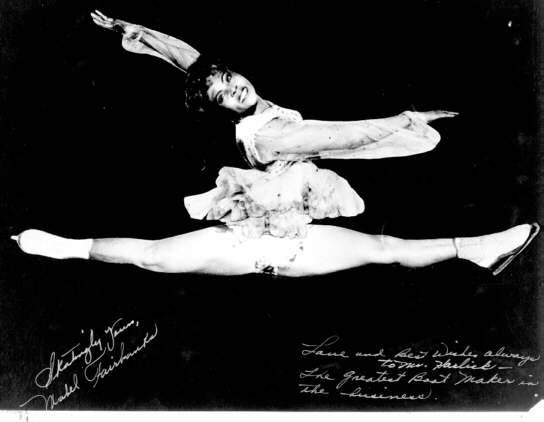
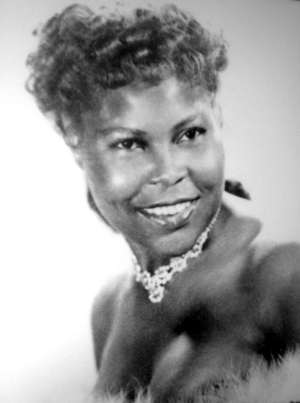
Yes, those are ice skates! Like many pioneers Ms. Mabel’s story is one of humble beginnings, struggle, triumph, and the laying of foundational ground for the next generation of persons in their genre to stand upon. Born on November 14, 1916 in New York City, Fairbanks discovered her lifetime passion while watching a Sonia Henje movie. She then saw a pair of black skates in a pawnshop window and talked the dealer down to $1.50. They were two sizes too big, but that didn’t stop Fairbanks. She stuffed them with cotton, found her balance on blades by going up and down the stairs in her building, and took to the nearby frozen lake. It wasn’t long before Fairbanks was sailing across the ice, and a passerby suggested she try out the rink in Central Park, she was soon skating solid 6.0 judging, but the pro clubs wouldn’t have her because of her race. ”I remember they said to me, we don’t have Blacks in ice shows,” said Fairbanks. “But I didn’t let that get in my way, because I loved to skate.” Fairbanks continued to refine her skill and returned to the rink again and again. Then one day, the rink manager noted her persistence, along with the shiny pair of new skates her uncle bought from Macy’s, and let her inside. From then on, Fairbanks’ ability and sparkle shattered the race barrier at that pivotal rink, and professional skaters started giving her free lessons. In the 1940s, Fairbanks came to Los Angeles and performed in nightclubs like Cyro’s. Soon Fairbanks was invited to skate on the road with the “Rhapsody On Ice” Show, even though she was used as “someone to skate in the dark countries.” She wowed international audiences but returned to the states only to find it still blind to her talent, but not to her color. After her pro years passed her by, she became a teacher and coach, giving free lessons to those who could not afford to pay. She coached the first African American to win a national title (Atoy Wilson, 1966), and the first African Americans to win the national pairs title (Richard Ewell and Michelle McCladdie, 1972).
Her knowledge and insight led to the unlikely pairing of Tai Babilonia and Randy Gardner, which resulted in this duo winning five national titles and the world championship. If that’s not an unsung hero, I don’t know what is. Courtesy of the Los Angeles Sentinel
To learn more, check out this YouTube clip
Honorable Mentions
Mademoiselle Le Zetora
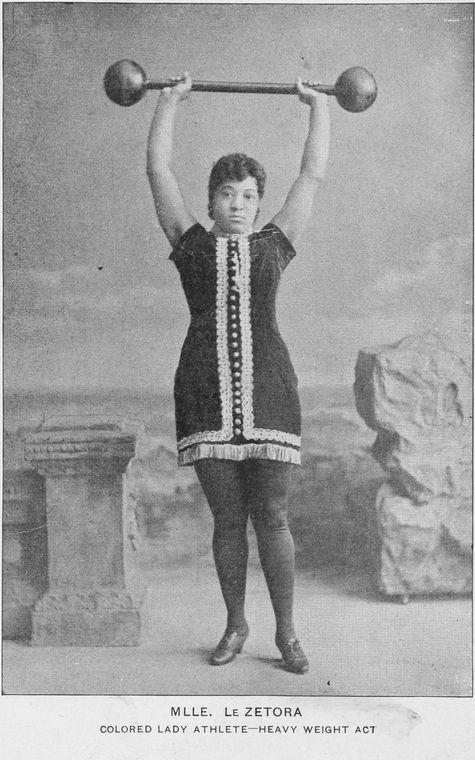
The few articles I found on her were in French! Dang it American Public Schools! Why can’t you teach kids 5 languages like they do in the Netherlands! This could have been a great find for me! Ugh! Anywho, I bet Mademoiselle had a mean gun show.
New York State Negro Tennis
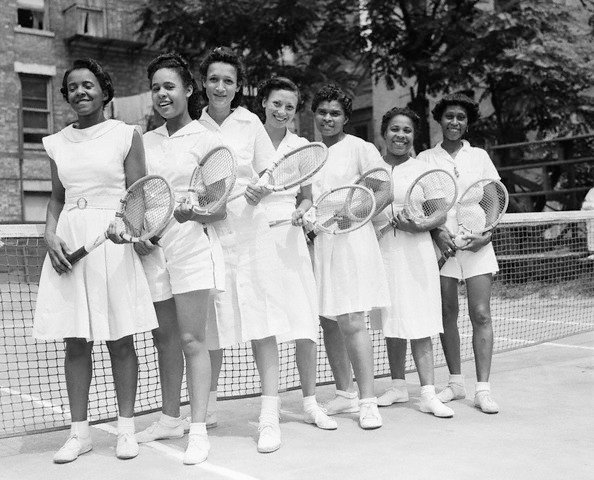
Here are some tennis players at the New York State Negro Tennis Championships, at the Cosmopolitan Tennis Club in New York City, August 1940. From left to right: Louise Graham, Mt. Vernon, NY; Katheryn Neal, Columbia, SC; Katheryn Watson, Columbia, SC; Vivian Russell, Columbia, SC; Myrtle Beavers, New York City; Beryl Lyroke, Boston MA and Lamarr Turpi, Poughkeepsie, NY. Courtesy of Vintage Black Glamour
Josephine Baker
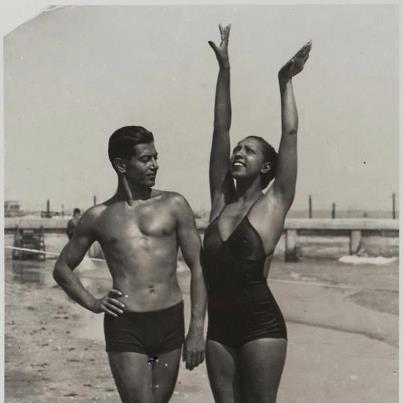
I know she was a dancer. But I still thought this pic of her on her way to take a swim with Russian ballet dancer Serge Lifar is awesome. I get a kick out of seeing throwback pics of fit people. There were no yoga studios, Bow Flex machines, and whatnot. Just straight up calisthenics! Oh yeah! I’m digging the swimsuit. Just might have to get me one. Courtesy of Vintage Black Glamour
Billie Holiday
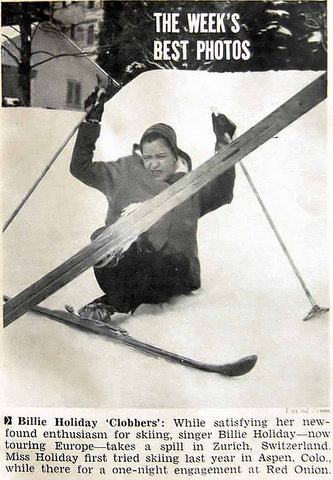
Billie Holiday skiing in Zurich, Switzerland was “The Week’s Best Photo” in Jet’s February 25, 1954 issue. I wonder did she yell “Ain’t nobody go time for this!” in Swiss German? LOL. I love this photo. May her soul rest in peace.
Black Female Equestrian
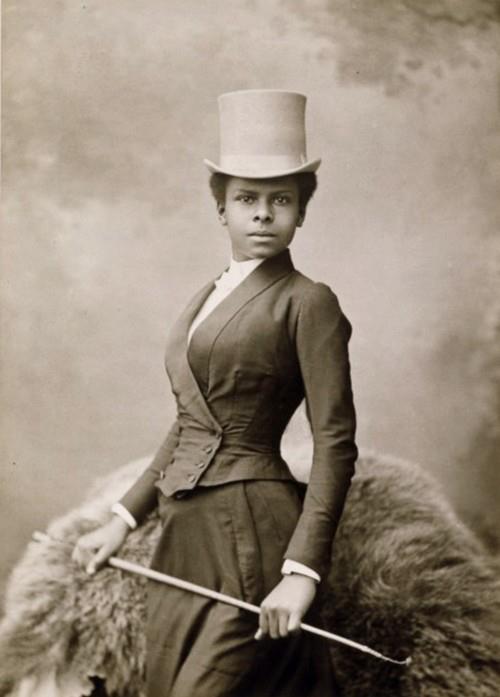
I could not find a name, location, or historical background for sure. But I am sure of a few things: She’s Black (the mini fro is a giveaway). She’s an equestrian (the outfit/uniform). And she did not come to play games. That is a 1st place face! I’m digging the jacket! Courtesy of Vintage Black Glamour
I hope you have enjoyed reading this as much as I have enjoyed sifting through the gobbly gook of the internet to give you all some factual goodness. If you have more accurate details on Mademoiselle and/or the “Black Female Equestrian”, feel free to post. I’m open to learning more.
Major shout out to the curator of Vintage Black Glamour. I liked their Facebook page a few months ago and discovered so many long lost photos of my African American heritage. If you’re into timeless photos that capture known and unknown historical figures of African descent, you’ll find this site to be a treasure trove!
So how many women from this blog post were you familiar with? Are there any other notable African American female athletes that you know of that made their mark on history prior to the 80′s? I think this topic deserves an 80′s, 90′s, and New Millenium post too! Your feedback is greatly appreciated.
Love, Peace, and Sweat,
Monisha R.
Monisha Randolph is a Senior Contributing Blogger for Sporty Afros. Founder of Runner’s Revelations, Monisha is a RRCA Certified Distance Running Coach specializing in running clinics and training programs for beginner runners. She’s also the author of Runner’s Revelations: How Running Changed My Walk. To learn more about Monisha please visit www.runnersrevelations.com. Follow her on Twitter @RunRevelations and join the Runner’s Revelations Fan Community on Facebook.
Tags: Monisha's Minute
 Tweet this!
 Digg it!
 Add to Delicious!
 Share on Facebook!
 Share on Reddit!
 Stumble it

3 Comments
really loved this post :- )
Awesome post! Loved learning about Mabel Fairbanks!
Thank you for posting this. I wish I could re-blog it.